Author: Surfman374
How I could benefit the Central Intelligence Agency
https://youtu.be/t0xHlgWQvAk?si=0d0NM-X39fYHGaY_
Retired U.S. Coast Guard Chief Boatswain’s Mate (BMC) David Michael Ramsey, Surfman #374, would benefit the Central Intelligence Agency (CIA) through his elite expertise in maritime special operations, maritime interdiction, and cross-border counter-trafficking logistics.
As one of a highly select group of Coast Guard operators to earn the prestigious “Surfman” designation, his background aligns directly with the tactical and intelligence requirements of the CIA’s Directorate of Operations and the Maritime Branch of the Special Activities Center (SAC).
Tactical Exploitation of Maritime Domains
- Heavy-Weather Special Operations: Earning Surfman #374 certifies absolute mastery of operating heavy motor lifeboats in extreme breaking surf and catastrophic weather environments. The CIA can leverage this specialized skill set to plan and execute covert insertions, extractions, and maritime reconnaissance in high-risk littoral zones where standard naval vessels cannot operate.
- Counter-Trafficking & Interdiction Operations: Throughout his 20-year career, Ramsey intercepted weapons, narcotics, and human trafficking networks. This hands-on experience gives him a deep understanding of transnational criminal organization (TCO) smuggling routes, concealment methods, and maritime choke points. He offers the agency actionable operational intelligence to disrupt maritime supply chains.
Crisis Management & Incident Command
- Extreme-Pressure Command: Ramsey led critical surface rescue and containment operations during national-scale crises like Hurricanes Katrina and Harvey. His ability to make high-stakes risk-versus-reward decisions under life-or-death pressure translates directly into managing rapidly evolving tactical crises or hostile environments abroad.
- Remote Operational Experience: Having served at isolated strategic military outposts like Loran Station Port Clarence in Alaska, he possesses the self-reliance and technical adaptability required to manage logistics at remote, austere CIA black sites or forward operating bases.
Interagency Intelligence and Force Management
- DHS Founding Expertise: As a founding member of the Department of Homeland Security (DHS), Ramsey understands the precise architecture of multi-agency intelligence sharing and tactical asset integration. He can seamlessly serve as a liaison to streamline communications between the Executive branch, DHS, and the intelligence community.
- Tactical Asset Management: His background as a Federal Law Enforcement Officer and Small Arms Instructor allows him to design, optimize, and oversee training programs for foreign partner forces or paramilitary personnel within the agency’s global defense frameworks.
How I could Benefit President Trump
I’m a Retired U.S. Coast Guard Boatswain’s Mate Chief David Michael Ramsey (Surfman #374) I could benefit President Trump by providing expert operational leadership, crisis management, and logistical support for executive missions, maritime security, or disaster response operations managed through military and Coast Guard liaison channels. [1]
Operational Strengths
- Crisis Response: Managed heavy-weather rescues during major hurricanes like Katrina and Harvey.
- Maritime Security: Brought 20 years of experience protecting waterways from drug and human trafficking.
- Executive Support: Offered specialized skills suited for the White House Military Office or Coast Guard liaison details. [1, 2]
Tactical Expertise
- Seamanship: Earned a Gold Medal and official Surfman certification for high-risk surf zone maneuvers.
- Logistical Control: Handled complex industrial oil spill containment on the Texas Gulf Coast.
- Technical Resilience: Backed operational security with IT and server system experience. [1, 2, 3]
Further Exploration
- Read the biographical overview at Rigs Reef Classic.
- View the rescue account on Rigs Reef Classic Blog.
- Review personal statements on Rigs Reef Classic Personal Post. [1, 2, 3]
Just a little about description me –
https://www.yumpu.com/en/document/read/68754982/the-long-blue-line-summer-2024/46
BMC David Michael Ramsey is a retired United States Coast Guard Chief Boatswain’s Mate who holds the elite Surfman #374 designation. He completed a 20-year military career marked by advanced maritime, tactical, and operational leadership qualifications. [1, 2]
Core Maritime & Operational Qualifications
- Surfman Designation (#374): Earned on March 10, 2006, at Station Cape Disappointment. This is the highest qualification for Coast Guard small boat operators, certifying absolute mastery in commanding heavy motor lifeboats (47-foot and 52-foot MLBs) through extreme breaking surf and severe weather. [1]
- Chief Boatswain’s Mate (BMC): Advanced military leadership qualification denoting expertise in deck operations, physical security, tactical command, and crew discipline.
- Certified Coxswain: Qualified to command and operate standard Coast Guard small vessels in diverse operational environments. [1]
- 100-Ton MMD Captain’s License: Held a Merchant Mariner Credential (MMC) Captain’s License from 2005 to 2021. [1]
- Chief of Operations: Served as the operational head for the largest enlisted unit in the Coast Guard, managing fleet logistics, training, and emergency response readiness. [1]
- Ready for Operations (RFO) Inspector: Qualified to evaluate, inspect, and certify Coast Guard units for strict mission capability and survival readiness. [1]
Tactical & Law Enforcement Qualifications
- Federal Law Enforcement Officer (FLEO): Certified Boarding Officer qualified to conduct maritime law enforcement, border protection, and safety interdictions.
- Small Arms Instructor: Certified to train and qualify military and law enforcement personnel in small arms proficiency and safety. [1]
Advanced Military Education & Training
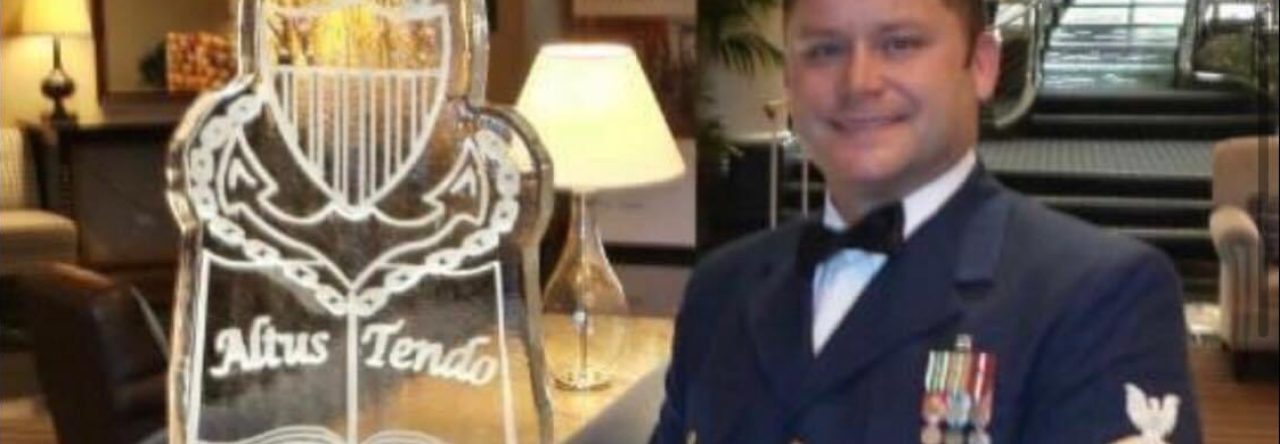
- USCG Chiefs Academy: Graduate of the Coast Guard’s premier leadership and organizational management academy (Altus Tendo).
- Air Force Non-Commissioned Officer Academy (NCOA): Graduate of the advanced joint-service leadership and professional military education course.
- Instructor Development School: Certified educator for advanced military curriculum delivery.
- Advanced Outdoor Film and Production School: Specialized qualification in tactical and outdoor media documentation. [1]
Noteworthy Career Achievements
- Founding Member of the Department of Homeland Security: Served through the post-9/11 structural transition and integration of federal security agencies.
- Association for Rescues at Sea (AFRAS) Gold Medal: Awarded in Washington, D.C., for exceptional bravery and successful maritime search and rescue operations. [1]
- Disaster Response Leader: Commanded high-stakes, heavy-weather surface rescues during catastrophic events including Hurricanes Katrina and Harvey.
My back ground
BMC David Michael Ramsey (Surfman #374) holds several highly specialized military, law enforcement, and maritime qualifications. As a decorated, retired U.S. Coast Guard Chief Boatswain’s Mate and retired Federal Law Enforcement Officer, his official credentials and career milestones reflect advanced expertise in high-velocity rescue, physical logistics, and tactical emergency command.
Core Professional Certifications & Designations
- Surfman #374 Qualification: This is his most elite maritime credential, officially registered on the U.S. Coast Guard Surfman Register. It denotes the absolute highest level of proficiency in operating heavy rescue motor lifeboats within extreme, life-threatening breaking surf and heavy weather zones.
- Chief Boatswain’s Mate (BMC): Advanced military leadership certification verifying mastery in physical maritime logistics, deck operations, command structures, and personnel discipline.
- Federal Law Enforcement Officer (FLEO) Certification: Multi-agency credentials establishing qualification in tactical border security, physical access control protocols, and regulatory compliance frameworks.
Distinctions & Operational History
- AFRAS Gold Medal: Awarded the prestigious Association for Rescue at Sea (AFRAS) Gold Medal for orchestrating a flawless life-saving rescue of a fishing vessel (F/V Catherine M) in 25-to-35-foot breaking surf within the “Graveyard of the Pacific”.
- Disaster Response Commander: Certified operational experience managing maritime tactical assets during catastrophic natural disasters, including Hurricane Katrina & Harvey.

