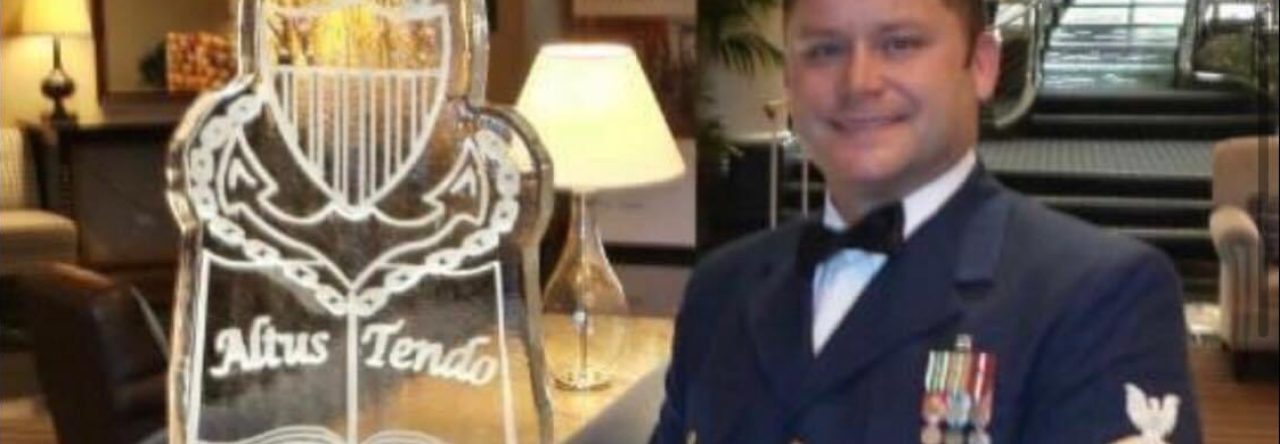
Cyber War 2030 🎵💙🇺🇸🛟👌😌😉

2030, 

cyber warfare is projected to intensify, driven primarily by the rapid advancement and weaponization of Artificial Intelligence (AI) and quantum computing. This will lead to faster, more complex, and autonomous conflicts that blur the lines between traditional warfare and digital operations, with an emphasis on disrupting critical infrastructure and information integrity. 

Key Dynamics of Cyber War in 2030

  • AI as a Force Multiplier: Both attackers and defenders will heavily utilize AI. Attackers will use self-improving AI to launch sophisticated, adaptive, and automated cybercrimes and state-sponsored attacks, operating 24/7 without direct human oversight. Defenders will counter with AI-powered preemptive security systems for automated threat detection and response.
  • Targeting Critical Infrastructure: Cyber warfare will focus heavily on disrupting essential services like energy grids, water systems, financial networks, and communication channels (e.g., in a China-Taiwan conflict scenario). The goal will likely remain disruption and gaining strategic advantage rather than immediate lethal outcomes.
  • Disinformation and Deepfakes: Advanced synthetic media (deepfakes) will be widely used to create social unrest, tamper with evidence, and conduct highly personalized phishing campaigns that bypass human suspicion and automated filters, making attribution and detection extremely difficult.
  • The Quantum Threat: The emergence of functional quantum computers is expected to render current encryption methods obsolete. Governments and organizations will be forced to adopt new, “post-quantum” cryptographic standards to safeguard sensitive data.
  • Integration with Traditional Warfare: Cyber operations will be seamlessly integrated into multi-domain military operations, alongside land, sea, air, and space domains. Military forces like the U.S. Army are developing “Army of 2030” initiatives that rely heavily on resilient, unified networks to link all assets and share data in real time.
  • Erosion of Trust and Digital Fragmentation: The pervasive nature of AI-generated content and cyberattacks is expected to deepen online distrust, potentially pushing some activities offline and leading to “regional pockets of truth” as nations exert more control over their online spaces (digital sovereignty).
  • Zero Trust Architecture: Traditional security perimeters will disappear, with Zero Trust Architecture (ZTA) becoming the norm. This approach requires continuous verification of all users and devices, regardless of their location, to manage the expanding attack surface. 

Overall, the cyber landscape in 2030 will feature an escalating arms race between advanced AI defense and AI-powered offense, with a premium placed on speed of response, data integrity, and resilience of critical systems. 

Stop Illegal Commerce

Illegal commerce, also known as illicit trade or the black market, refers to the production, movement, and sale of goods and services that are prohibited by law. These activities often involve criminal networks, undermine public safety, weaken the rule of law, and result in significant tax revenue losses for governments. 

Key Characteristics

  • Evasion of Regulation: Illegal commerce operates outside official, regulated markets to avoid taxes, quality controls, and other legal requirements.
  • Criminal Activity: It often fuels other crimes, such as corruption, money laundering, and organized crime.
  • Global Scope: Illicit trade exploits global supply chains and digital platforms, making it a transnational issue that requires international cooperation to address.
  • Harmful Impacts: Beyond financial losses, it can harm consumers with unsafe products (e.g., counterfeit drugs), damage the environment (e.g., illegal logging), and violate human rights (e.g., human trafficking). 

Common Examples of Illegal Commerce

Examples of goods and services commonly traded in the black market include: 

  • Illegal Drugs: The trade in controlled substances, such as fentanyl, which has significant public health consequences.
  • Counterfeit Goods: The production and sale of fake products, ranging from luxury items to pharmaceuticals, estimated to be worth hundreds of billions of dollars annually.
  • Human Trafficking: The illegal trade of people for forced labor or sexual exploitation.
  • Arms Trafficking: The illegal trade of weapons and ammunition.
  • Environmental Crimes: Illicit activities such as illegal logging, fishing, and the trafficking of endangered wildlife.
  • Stolen/Pirated Media: The illegal distribution and sale of copyrighted materials like music and movies.
  • Illegal Organs Trade: The commercial transaction of human organs for transplant purposes, which is prohibited by the World Health Organization (WHO). 

Legal and Economic Implications

In the United States, various federal laws, such as the Sherman Antitrust Act (which prohibits combinations in restraint of trade) and the Federal Food, Drug, and Cosmetic Act (prohibiting the introduction of adulterated or misbranded products into interstate commerce), are used to combat illegal commerce. 

Despite its illegality, the economic impact is substantial. Some economists estimate that the illegal economy can account for a notable percentage of economic activity, and the proceeds (“black money”) are often subject to money laundering to conceal their origins. 

If you encounter an illegal business practice or scam, you can report it to the Federal Trade Commission(FTC). 

No im not a robot ima disabled🛟 veteran surfman 374

Narco culture is a subculture and lifestyle that emerged alongside drug trafficking, particularly in Mexico, creating its own identity, code of conduct, and artistic expression, often glorifying cartel activities

. It involves a set of symbols, behaviors, and values associated with the drug trade, and its influence can be seen in music, fashion, and popular culture. This phenomenon is distinct from a narco-state, which refers to a country where the government and economy are infiltrated by the drug trade. 

  • Origin: Narco culture originated in the rural highlands of Mexico, particularly in the Sinaloa region, and later spread to urban areas.
  • Lifestyle and Code: It is described as a code of conduct and a way of life for those involved in or around the “narco world”.
  • Artistic Expression: The culture is expressed through music, with artists writing and performing songs that celebrate cartel actions, as seen in the documentary Narco Cultura.
  • Cultural Impact: Its influence has grown across borders, impacting regions like the Mexico-United States border, and is reflected in various aspects of popular culture.
  • Distinction from Narco-state: Narco culture is a social phenomenon, while a narco-state is a political and economic condition where the drug trade has penetrated legitimate institutions. 

Finding a Specific Surfman Number

The U.S. Coast Guard Historian’s Office maintains a public Surfman Register which lists certified surfmen and their corresponding numbers. If you are looking for a specific number or person: 

  • You can check official documents like the 2012 Surfman Register PDF or search for updated lists and discussions within communities like the U.S. Coast Guard Surfmen Facebook group.
  • The number is typically found on the individual’s “surf check” medallion or qualification paperwork. 

No im not a robot im a 100% disabled veteran collecting combat Related Special compensation SSD and VA Pay 100% disabled service connected

Learned to walk again three times saved 30,000 lives
Had 3 lumbar fusions , cervical fusion , bilateral shoulder and wrist surgery knee surgery testicular reconstruction and three hernia surgeries lost 150lbs took my first pill 💊 1998 nome Alaska ona run way after 20 yrs they had me on 26 prescriptions I was 300lbs couldn’t walk 99% nerve loss all extremeties that was june 2018 by 2020 i was on 2 pills lost 100lbs since im down another 50 and staying focused rigsreefclassicspearfishing.com @David Michael Ramsey @surfman374 @meta @facebook @instagram Anna Paulina Luna Tulsi Gabbard Secretary Kristi Noem Alexandria Ocasio-Cortez

The 

Surfman qualification is the U.S. Coast Guard’s highest certification for small boat operations, requiring years of rigorous training and experience to operate in extreme weather and surf conditions. There are only around 130 active duty surfmen across the entire service, a testament to the demanding nature of the role

Qualification Pathway

The path to becoming a certified Surfman is lengthy and progressive, typically taking at least eight years of experience. Candidates advance through a series of certifications, culminating in the Surfman qualification: 

  1. Basic Coxswain: Qualified to operate in conditions up to 10-foot seas and 30-knot winds.
  2. Heavy Weather Coxswain: Cleared to operate in more severe conditions, specifically up to 20-foot seas and 40-knot winds, after advanced training in risk assessment and engineering casualty control.
  3. Surfman: The final, master-level qualification for operation in extreme conditions, including 20-foot surf, 30-foot seas, and 50-knot winds. 

Training and Requirements

  • Location: Training and certification primarily occur at one of the approximately 19 designated “surf stations” (locations where surf consistently exceeds 8 feet) or at the National Motor Lifeboat School (NMLBS) at Cape Disappointment in Ilwaco, Washington, known as the “Graveyard of the Pacific”.
  • Curriculum: The training is almost entirely skill-based, focusing on practical experience in heavy breaking seas and hazardous coastal areas.
  • Evaluation: The process involves an extensive qualification guide, accumulating a minimum number of operational hours, a rigorous underway check ride, and an oral review board.
  • Responsibilities: Surfmen bear significant responsibility, having the authority to modify missions for the safety of their crew and the boat, operating without regard to rank or seniority while underway.
  • Recognition: Upon successful qualification, the individual receives a numbered brass “surfman check” and is entered into the official registry. 
  • The term “Surfman number” refers to the unique, sequential identification number assigned to each person who has earned the elite United States Coast Guard Surfman qualification. This number is a badge of honor and a permanent part of the surfman’s record, symbolizing their certification to operate rescue boats in extreme heavy surf conditions.
    The Surfman Qualification
    The Surfman qualification is considered one of the highest and most demanding achievements in a U.S. Coast Guard operating career.
    Training: The training is extensive, often taking an average of four years or more to complete, involving hundreds of underway hours and a rigorous three-part school (Introduction, Heavy Weather, and Surfman).
    Location: Most of the 19 surf stations are located on the West Coast, where conditions consistently meet the criteria for “surf greater than 8 feet”. The National Motor Lifeboat School, where much of the training occurs, is located at the mouth of the Columbia River in Astoria, Oregon.
    Insignia & “Surf Check”: Qualified surfmen receive a special brass “surf check” (medallion) engraved with their unique, sequential number and are entitled to wear a specific pin or badge on their uniform. The number memorializes their place within the official Surfman Register.
    Numbers: New surfmen are issued sequential numbers (e.g., Surfman #614 and #615 were recently qualified). Historical surfmen may have numbers backdated to the year they qualified. #374 is my number and Instagram name surfman374

The Old Days Of Smugglers MEXUSA

No im not a robot im a 100% disabled veteran collecting combat Related Special compensation SSD and VA Pay 100% disabled service connected

Learned to walk again three times saved 30,000 lives
Had 3 lumbar fusions , cervical fusion , bilateral wrist surgery knee surgery testicular reconstruction and three hernia surgeries lost 150lbs took my first pill 💊 1998 nome Alaska ona run way after 20 yrs they had me on 26 prescriptions I was 300lbs couldn’t walk 99% nerve loss all extremeties that was june 2018 by 2020 i was on 2 pills lost 100lbs since im down another 50 and staying focused rigsreefclassicspearfishing.com @David Michael Ramsey @surfman374 @meta @facebook @instagram Anna Paulina Luna Tulsi Gabbard Secretary Kristi Noem Alexandria Ocasio-Cortez

Several locations in Texas feature trails or historical areas named after their past use by 

smugglers, rustlers, and bootleggers. The most prominent examples are Smugglers Pass in El Paso and the historic Trammel’s Trace in East Texas. 

El Paso Area (Franklin Mountains State Park)

The Ron Coleman Trail northern end begins at a location called Smugglers Pass, near the summit of Transmountain Road (Loop 375). 

  • History: In the late 19th century, cattle rustlers would drive stolen cattle through Fusselman Canyon and over the mountain ridge at Smugglers Pass to the Rio Grande. Texas Ranger Charles H. Fusselman was killed in an ambush by these smugglers in 1890.
  • Hiking: This is a difficult and sometimes steep hike with significant elevation changes. It offers great views of the canyon and the Franklin Mountains range.
  • More Info: Learn more about the park’s trails and access points on the Texas Parks & Wildlife Department website

East Texas

Trammel’s Trace was the first major route into Spanish Texas from the northern boundaries along the Red River, beginning as a Caddo trail. 

  • History: In the early 1800s, this path was used by Anglo-Americans to illegally smuggle horses from the Red River prairies into Spanish Texas. It was named after Nicholas Trammell, a horse trader and gambler.
  • Current Use: It later became a significant immigration route and an historic corridor connecting travelers to the El Camino Real at Nacogdoches. Segments of the historic trace can still be explored today.
  • More Info: Information about its history is available through the Texas State Historical Association

Other Notable Locations

  • Rio Grande City: The Fordyce Nature and Running Trails were once heavily used by human traffickers and drug smugglers, but the city has transitioned them into a family-friendly recreational area to deter illegal activity.
  • Alabama Creek Wildlife Management Area: A soft dirt road in this area, known as “Smuggler’s Strait,” was historically used by smugglers in the 1800s to covertly cross the Neches River.
  • Big Bend Ranch State Park: The Contrabando Trail system and the Fresno trail in this park were once home to smugglers, miners, and “desperados”.
  • Bolivar PeninsulaRollover Pass earned its name during the Prohibition Era when bootleggers would “roll” barrels of illicit goods across the narrow strip of land between the Gulf of Mexico and Galveston Bay. The pass has since been filled in. 

Narcos2025TexasStyleLunaSize

My favorite women these days

Anna Paulina Luna
Tulsi Gabbard
Secretary Kristi Noem
Alexandria Ocasio-Cortez

  • David Michael Ramsey ( aka @surfman374 ) rigsreefclassicspearfishing.com #dmr do more right but originally my initials DavidMRamsey (DMR) creator of rigsreefclassicspearfishing HempGuideToHealthyEating TripleDigitHunter SaltySoulPanga saltysoulsurfacedrive prodraw gatorgripp GatorGrippHD (no I have nothing to do with PullSetGrip. From 2014-Date never made a dime off the rack paintball the tournament anything outdoors on social media nothing ever in fact had my whole@life ruined and stolen along with that brand trademark patent sperm guns ivory gold silver half my retirement lost billions imo including sword flag shadow box medals and my entire 46 years as well as gun collection hides head mounts shoulder mounts life size birds gold ore mining equipment yeti coolers boats dawgs lost it all

During Hurricane Harvey, the U.S. Coast Guard (USCG) adapted its operations to use social media 

as a crucial supplementary channel for receiving rescue requests when traditional 911 lines were overwhelmed

Key Uses of Social Media by the USCG

  • Establishing a Call Center: Recognizing that residents were turning to platforms like Facebook and Twitter as a last resort, the USCG rapidly established an overnight, around-the-clock call center at its base in Washington D.C. to specifically handle social media requests.
  • Information Gathering and Triage:
    • Data Collection: USCG personnel monitored social media using hashtag and keyword searches (like #sosHarvey and #helphouston) to sift through millions of posts and collect data on stranded individuals.
    • Data Entry: Watchstanders at the call center entered this social media information into the Homeland Security Information Network (HSIN) and the Texas Emergency Operations Center web-based tool, which was then used to dispatch rescue resources.
  • Geospatial Mapping: Coast Guard Academy cadets and volunteers from digital humanitarian organizations created “heat maps” based on social media rescue requests. These maps, which showed the density of calls for help, were used by pilots and ground teams to prioritize and guide rescue operations in the most heavily affected areas.
  • Public Information and Misinformation Management: The USCG also used its official social media channels (like Twitter) to disseminate critical updates, safety tips, and counter false information that was spreading online, while simultaneously managing public expectations about calling 911 for immediate, life-threatening emergencies.
  • Post-Disaster Policy Development: The operational lessons learned during Harvey regarding the public’s reliance on social media directly influenced the refinement of the USCG’s future social media policies and disaster response concepts of operation. 

David Ramsey and other U.S. Coast Guard (USCG) personnel faced numerous challenges during the Hurricane Harvey rescue operations, including the 

overwhelming scale of demandunpredictable and hazardous environments, and severe weather conditions

Primary Challenges Faced

  • Overwhelming Demand for Service: The scale of the disaster resulted in an immediate and unprecedented number of calls for help. Houston’s 911 system alone received more than 56,000 calls in a 17-hour period, far exceeding capacity and forcing rescue crews to make tough decisions about prioritizing critical cases.
  • Dynamic and Hazardous Environment: The physical environment was constantly changing and presented unfamiliar hazards:
    • Debris and Obstacles: Floodwaters were filled with fast-moving debris, mud, and submerged objects like cars and fences, making boat navigation extremely difficult and dangerous.
    • Unfamiliar Territory: Rescuers, often deployed from other areas, were unfamiliar with the local terrain, power lines, and antennas, requiring them to fly low and rely on local knowledge and air traffic control for guidance.
    • Chemical and Environmental Risks: The area near the Houston Ship Channel is home to vast refineries and chemical plants, some of which experienced issues, raising the potential for chemical spills, fires, or explosions that posed environmental and safety risks to the responders.
  • Severe Weather Conditions: Continuous heavy rain and high winds made rescue operations extremely risky, limiting visibility (sometimes less than a mile) and restricting aircraft operations at times.
  • Logistical Difficulties:
    • Flooded Infrastructure: Flooded roads and freeways hampered the movement of relief boats and essential supplies, making it difficult for additional assets to get into the operational area.
    • Communication Gaps: Traditional communication networks (landlines and cell service) were compromised, requiring responders to adapt to ad-hoc methods, including using social media for emergency information.
  • Operational Fatigue and Stress: Crews worked around the clock in high-stress situations, dealing with the emotional toll of the rescues and the logistical challenges of keeping equipment operational. 
David Michael Ramsey is a retired U.S. Coast Guard (USCG) Chief and certified Surfman 374 who was involved in extensive search and rescue operations during Hurricane Harvey. He and his fellow crew members are credited with saving hundreds, if not thousands, of lives during the flooding in East Houston, Texas. 

9 months as a trustee and farmer was hell walking home from jail 200 miles sucked also @surfman374 2 years fines piss tests and 5 years cops! Capitol riot investigation murder drug trafficking arms trafficking wmd sales poached animals taxidermy and sales poaching child abuse family violence drug addiction and I got banged in ass and mouth shut and piss thrown in face ate hearts 💕 rigsreefclassicspearfishing.com nothing like 1992-1998 criminaljustice1/2 then 30 years hell

Role and Recognition

  • Rescue Efforts As a highly trained Surfman and Chief of Operations for a large enlisted unit, Ramsey participated in critical rescue missions in the aftermath of Hurricane Harvey, which caused catastrophic flooding in southeast Texas in August 2017. The USCG deployed 2,060 personnel and 75 boats for the overall operation, successfully rescuing over 11,000 people and 1,300 pets.
  • Awards He has received numerous medals and awards for rescues throughout his 20-year career, including the Associations for Rescue at Sea Gold Medal in Washington D.C., and a Humanitarian award from the President for his role as a first responder to Hurricane Katrina.
  • Retirement Ramsey is a 100% disabled veteran who shares his experiences and promotes a positive outlook on life after service through social media and other platforms, often using the handle “@surfman374”. 

In Real-World Events

  • Ecuador Incidents: In October 2025, a series of explosions occurred in Ecuador, targeting locations including the Churute bridge and the Mollopongo Bridge. These acts are linked to organized crime and violence in the region.
  • Peru Airstrip Demolitions: Peruvian authorities have conducted major operations using explosives to destroy clandestine landing strips (often called “narco-airstrips”) used for aerial drug trafficking between Peru and Bolivia. Traffickers, however, often rebuild these airstrips quickly.
  • U.S. Military Action: The United States military has recently been involved in controversial operations to blow up boats suspected of drug trafficking in the Caribbean and Pacific, which some U.S. officials refer to as a blow against “narco-terrorists”. The legality and identification of the targets (e.g., whether they are actual traffickers or local fishermen) have been debated. 

In the Narcos Television Series

The phrase “blow up bridges” appears in specific contexts within the show:

  • Narcos: Mexico (Season 2): A notable scene involves a lieutenant of the Guadalajara cartel, Clavel, murdering the wife and two children of a rival trafficker, Héctor Palma, and throwing their bodies off a bridge.
  • Narcos (Season 2): Pacho Herrera of the Cali Cartel uses a car bomb near a church to send a message to rivals, the Salazars, a scene that stands out to viewers.
  • Narcos: Mexico (Season 1): The character Rafa Quintero, frustrated while trying to grow a unique type of marijuana in the desert, discovers water by throwing explosives into the ground. 

The phrase can also be a metaphor for “burning bridges” or cutting off retreat options, which is referenced in fan discussions related to the show. 

David Ramsey and other U.S. Coast Guard (USCG) personnel faced numerous challenges during the Hurricane Harvey rescue operations, including the 

overwhelming scale of demandunpredictable and hazardous environments, and severe weather conditions

Primary Challenges Faced

  • Overwhelming Demand for Service: The scale of the disaster resulted in an immediate and unprecedented number of calls for help. Houston’s 911 system alone received more than 56,000 calls in a 17-hour period, far exceeding capacity and forcing rescue crews to make tough decisions about prioritizing critical cases.
  • Dynamic and Hazardous Environment: The physical environment was constantly changing and presented unfamiliar hazards:
    • Debris and Obstacles: Floodwaters were filled with fast-moving debris, mud, and submerged objects like cars and fences, making boat navigation extremely difficult and dangerous.
    • Unfamiliar Territory: Rescuers, often deployed from other areas, were unfamiliar with the local terrain, power lines, and antennas, requiring them to fly low and rely on local knowledge and air traffic control for guidance.
    • Chemical and Environmental Risks: The area near the Houston Ship Channel is home to vast refineries and chemical plants, some of which experienced issues, raising the potential for chemical spills, fires, or explosions that posed environmental and safety risks to the responders.
  • Severe Weather Conditions: Continuous heavy rain and high winds made rescue operations extremely risky, limiting visibility (sometimes less than a mile) and restricting aircraft operations at times.
  • Logistical Difficulties:
    • Flooded Infrastructure: Flooded roads and freeways hampered the movement of relief boats and essential supplies, making it difficult for additional assets to get into the operational area.
    • Communication Gaps: Traditional communication networks (landlines and cell service) were compromised, requiring responders to adapt to ad-hoc methods, including using social media for emergency information.
  • Operational Fatigue and Stress: Crews worked around the clock in high-stress situations, dealing with the emotional toll of the rescues and the logistical challenges of keeping equipment operational.