
Injures In Jail Suck @Surfman374 Instagram
Don’t get a dime for what I create or my blogs since 2009
#BlackNbluepaintball
#rigsreefclassicspearfishing
#saltysoultaxidermy
#spearfishingtalk Facebook group
Built it all don’t get paid for nothing…
David Michael Ramsey (they stole it all)! ~ surfman374 rigsreefclassicspearfishing.com
Gator-Gripp.com
BlacknBluePaintball.com
#DMR
#homeless everyone took it every thing i own is in my Tacoma what’s left of my life what i did … #corpuschristi #texas 💙❤️🛟🇺🇸
Whistleblower protections in Texas vary significantly between the public and private sectors, often leaving many workers with limited legal recourse.
Key Protections
- Texas Whistleblower Act: This is the primary protection for public employees (state or local government workers). It prohibits government entities from retaliating against employees who report a violation of law in good faith to an appropriate law enforcement authority. Remedies can include:
- Reinstatement of employment and seniority.
- Compensation for lost wages and benefits.
- Reimbursement for court costs and attorney fees.
- Texas Medicaid Fraud Prevention Act: This law specifically protects individuals who expose Medicaid fraud through “qui tam” lawsuits. Whistleblowers may receive 15% to 30% of any recovered funds as a reward.
- Specific Industry Protections: Texas labor codes provide limited protections for reporting certain issues, such as child abuse (for educators), elder abuse, or specific healthcare safety violations.
Significant Limitations
- No General Private Sector Protection: Texas does not have a general whistleblower law for private-sector employees. Most private workers rely on a patchwork of federal laws (like OSHA for safety or Sarbanes-Oxley for financial fraud) rather than state-level protections.
- “Appropriate Law Enforcement” Requirement:Under the Texas Whistleblower Act, a public employee must report to an authority authorized to investigate or prosecute the specific law violated. Reporting to a supervisor or an internal compliance department often disqualifies the employee from state protection.
- Strict Deadlines: Public employees must typically initiate a formal grievance procedure within 90 days of the retaliatory act before they can file a lawsuit.
- At-Will Employment: As an at-will state, private employers can generally terminate employees for any reason not prohibited by specific statutes, making it difficult for whistleblowers to prove their firing was illegal retaliation.
Recent Legislative Efforts
- Whistleblower Protection and Accountability Act (2025/2026): Recent legislative proposals, such as House Bill 3893, aimed to expand protections to private-sector employees and establish a Texas Whistleblower Oversight Commission (TWOC). Key goals included increasing fines for retaliation to $500,000 and creating a support fund for whistleblowers facing legal costs.
Public corruption in Texas is often attributed to a combination of legal loopholes, one-party dominance, and specific regional pressures. Recent polling shows that 18% of Texas voters consider political corruption the state’s most pressing issue, ranking it above inflation and immigration.
Key factors contributing to the perception and reality of high corruption in the state include:
1. Lack of Campaign Finance Limits
Texas is one of the few states that has no limits on individual campaign contributions to candidates for state office.
- Wealthy Influence: This allows a small number of “megadonors” to exert significant influence over the political system. For example, in the 2010 cycle, just 204 individuals provided $70 million of the $200 million raised by candidates.
- Contractor Donations: State contractors are permitted to give millions to high-level officials, creating what critics call a “pay-to-play” perception that is prohibited in many other states and at the federal level.
2. One-Party Dominance
Texas has essentially operated as a one-party state since the current constitution was written in 1876, with Republicans holding every statewide office since 1994.
- Unchecked Power: Critics argue that when one party holds absolute control for decades, it creates an environment where power goes unchecked and officials become increasingly brazen.
- Weak Oversight: Nearly 90% of corruption cases investigated by the Texas Rangers are not prosecuted, often due to local prosecutors having the option to drop charges against political allies in their home districts.
3. Regional Corruption (South Texas & The Border)
South Texas, specifically the Rio Grande Valley, has historically high rates of corruption convictions.
- Drug Trafficking: The region’s proximity to major drug corridors means vast amounts of illegal money are available to corrupt public officials. Law enforcement and local leaders have occasionally been found shielding traffickers for “pay-to-play” bribes.
- Economic Vulnerability: In impoverished communities, those who control sizable government contracts become targets for bribery by contractors and other operators.
4. Recent High-Profile Scandals
- Attorney General Ken Paxton: Paxton has faced numerous corruption allegations, including a 2023 impeachment trial (where he was acquitted by the State Senate) and a long-running federal probe that the Justice Department recently declined to prosecute.
- Legislative Investigations: In 2025, Governor Abbott directed investigations into House Democrats for allegedly soliciting funds to “flee” and break quorum, while Attorney General Paxton investigated Soros-funded PACs for similar activities.
5. Weak Institutional Enforcement
The Texas Ethics Commission is frequently described by reform advocates as understaffed and lacking the robust investigative and enforcement powers needed to hold officeholders accountable.
high corruption in Texas stems from a combination of weak campaign finance laws allowing heavy donor influence, one-party dominance in certain regions creating limited oversight, and high-stakes border-related illicit activities. Key factors include “pay-to-play” politics, with over (\$150) million in donor money impacting legislative agendas, and a “compadre system” in South Texas. Campaign Finance & Donor Influence: Common Cause Texas reports that limited regulations allow a few individuals and corporations to hold significant influence over state policy, often prioritizing donors over public interest.Border Region Corruption: The FBI and other sources note that the illicit drug trade and high-value, unregulated money in border areas encourage partnerships between traffickers and local law enforcement officials.One-Party Control: In some regions, particularly South Texas, the lack of a competitive, opposing political party with authority leads to reduced accountability.Erosion of Ethics Standards: Investigations into, for example, the COVID-19 task force showed that many members were major donors to the governor’s re-election, a pattern that some observers say contributes to a perception of declining democratic norms. While some studies rank Texas in the middle of the pack for overall corruption, it is frequently cited by Texans as a top concern, especially regarding state-level leadership and political influence. @surfman374 💙🛟❤️🇺🇸💒🎵😘💡🩸💕😎
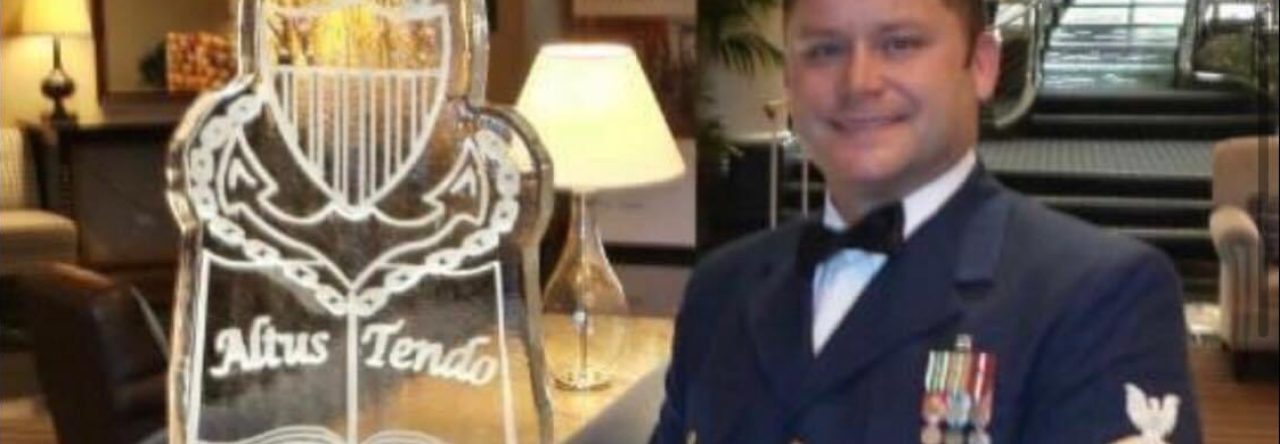
That’s why my Instagram is called (Surfman374) I’m the #374thSurfmanUSCoastGuard and they stole my whole life made me a trustee framer and walk 100’s of miles rigsreefclassicspearfishing.com #100percentdisabled #100percentcombatrelated and accused me of capital riots looked for cocaine in my home and truck and a dead body! Then accuse me of shit I never did and gave me a year in jail Nueces county annex and san Patricio … for liars cheaters thieves and corrupt cover ups! @surfman374 💙🛟❤️🇺🇸
Make It Bold | Be About It | Talk About It 💙 #HUSTLR 🛡I spent 20 Years serving the United States of America. BMCRamsey, Surfman374. It was an amazing career as a Ready for Operations Inspector, Chief of Operations for the Largest Enlisted Unit in the Coast Guard, Small Arms Instructor, Federal Law Enforcement Officer (Boarding Officer) Surfman. I Graduated Airforce NCOA, USCG Chiefs Academy Altus Tendo. Instructor Development School, Advanced Outdoor Film and Production School, and from 2005-2021 held a 100Ton MMD Captian License. I received the Associations for Rescue’s at Sea Gold Medal in Washington D.C. along with numerous other Medals and Awards for Rescues 100’s of 1000’s in 20 years serving. Yes I’m 100% Percent Disabled 100% Service Connected 100% Combat Related don’t let it stop me. Life is yours enjoy it create it Daily. Proud Retired Chief Loving Man, Veteran, and Father. #DepartmentofHomelandSecurity MLEA U.S. Coast Guard Boarding Officers & Boarding Team Members. It’s #SetStandard #TacticsTechniques #TheUseofForce God Bless my prayers for #FLEO’s Every Believer U.S. Department of Homeland Security #surfman374 #rigsreefclassicspearfishing #gatorgripphd #pullsetgrip #chief #LEO #LifeMatters #protectandserve ❤️🤍💙”God Bless Founder #DMR @surfman374 #SaltySoulTaxidermy #TripleDigitHunter
rigsreefclassicspearfishing.com
Birth certificate
drivers License
Social security card
Guns
Gold
Ivory
Taxidermy Mounts
Medical Bed
Leather couches
Retirement sword
ShadowBox
Challenge Coins
Military Uniforms
Military Covers from every unit
All my very ancient artwork and very special gifts from global travels @surfman374 that ivory was worth over $30,000 the couches $10,000 the guitars the gold the minerals the artwork priceless gifts the Japanese Glass floats from alutian islands the AlaskanNative art the flat hides and taxidermy over $50,000 worth the upgrades from VA, SocialSecurity And 3mhearingloss all gone! Over $30,000 in boat motor metal detecting and back country prospecting gear over $10,000 in freedivescuba gear over $30,000 ℹ tactical gear over $30,000 in camera and outdoor film and production equipment priceless gifts painting artwork custom knives you name it the comics and baseball cards $50,000 that’s just in the last 12 months that does include 3 divorces which resulted in total loss of my property millions lost to liars cheaters thieves not to mention a BrandTrademarkpatent (gator-gripp).com not to mention a paintball field blacknbluepaintball @Surfman374 $50,000 in construction equipment $25,000 in taxidermy equipment $10,0000 in meat processing equipment $30,000 in reloading and weapons equipment 🛟❤️🇺🇸
Stolen valor refers to the act of falsely claiming to have served in the military or to have earned military medals and honors, often for personal gain, prestige, or to deceive others, and it’s a phenomenon that has led to federal laws like the
Stolen Valor Act in the U.S., criminalizing the fraudulent wearing of military decorations or misrepresentation of service for tangible benefits. It harms genuine veterans by devaluing their sacrifices and exploits the respect military service commands, with penalties varying from fines to imprisonment, depending on the intent and specific actions, such as impersonating a service member or fraudulently obtaining benefits
.
What it involves:
- Wearing unauthorized military uniforms or medals.
- Falsely claiming combat experience, specific ranks, or injuries.
- Fabricating stories about military service or heroic acts.
- Using fraudulent documents or stolen identities.
Why people do it:
- Financial Gain: Obtaining veteran benefits, discounts, or merchandise.
- Social Status: Seeking prestige, respect, or credibility.
- Psychological Reasons: Sometimes linked to trauma or a desire to fit in.
Legal consequences:
- Stolen Valor Act (2013): Makes it a federal crime to fraudulently claim to have received certain high honors (like the Medal of Honor, Silver Star, Purple Heart) with the intent to obtain money, property, or other benefits.
- Penalties: Can include fines, up to a year in prison, or both, for violations.
- Uniform Code of Military Justice (UCMJ): Applies to active-duty personnel for such offenses.
Impact:
- Devalues the service and sacrifices of actual veterans.
- Erodes public trust in military claims and honors.
How it’s exposed:
- Inconsistencies in uniforms, stories, or documents.
- Investigations by veteran groups or online communities dedicated to exposing impostors.
 I’m The 374th Surfman USCG