
The term “antediluvian clans” most commonly refers to the
thirteen vampire clans founded by the Antediluvians, or Third Generation vampires, in the Vampire: The Masquerade roleplaying game. These clans are associated with figures such as Haqim (Assamites), Malkav (Malkavians), and Ventrue (Ventrue), who are believed to have survived the mythical Great Flood. While the term “antediluvian” literally means “before the flood,” in this context, it specifically refers to these ancient, powerful vampire progenitors and their corresponding clans.
Founders of the thirteen major clans
- Assamite: Haqim
- Brujah: Often associated with Troile, who usurped the original clan founder
- Cappadocians: Cappadocius
- Followers of Set: Set
- Gangrel: Ennoia
- Lasombra: Lasombra
- Malkavian: Malkav
- Nosferatu: Absimiliard
- Ravnos: Zapathasura
- Salubri: Saulot
- Toreador: Arikel
- Tremere: Tremere, who is an Antediluvian usurper
- Tzimisce: Tzimisce
Other related information
- Antediluvians: These are the legendary Third Generation vampires who are believed to have survived the Great Flood.
- Clan status: Some clans, such as the Brujah, have complex genealogies where the founder has been replaced by another Antediluvian.
- Antediluvian myths: There are many conflicting myths and prophecies surrounding the Antediluvians and their role in the world’s future, often portraying them as boogeymen who will rise and destroy their descendants.
“Antediluvian man” refers to the people who lived before the Great Flood described in the Book of Genesis, a period known for the exceptionally long lifespans of its patriarchs, such as Methuselah, who lived to be 969 years old. The term also has a more general, figurative meaning of “extremely old” or “out-of-date,” used to describe something very old. In the biblical context, this era is depicted as a time of increasing wickedness, ending with God sending the flood to cleanse the earth, saving only Noah, his family, and pairs of animals in the ark.
Biblical context
- The time period: The antediluvian age spans from the creation of Adam to the Great Flood.
- Longevity: Patriarchs like Adam, Seth, and Methuselah lived for hundreds of years, with Methuselah reaching the biblical age of 969.
- Wickedness and judgment: The period is characterized by a decline in human morality, leading to God’s decision to send the flood to punish the wickedness.
- The Nephilim: This era is also associated with the Nephilim, described as mighty, renowned warriors or giants.
Modern usage
- Literal meaning: The term “antediluvian” literally translates to “before the flood”.
- Figurative meaning: It is commonly used today as a humorous or critical description for anything that is very old-fashioned, outdated, or antiquated.
“
Antediluvian man” refers to people who lived during the antediluvian period, the era in biblical history between the Creation (or the Fall of Man) and the Great Flood of Noah.
Key Characteristics (Biblical Context)
The primary sources for the antediluvian period are the early chapters of the Book of Genesis (1 through 6), which describe a unique time in human history:
Extraordinary Longevity: Antediluvian individuals, or patriarchs, were recorded as living exceptionally long lives, often exceeding 900 years. The longest recorded lifespan belongs to Methuselah, who lived 969 years and died the same year the Flood occurred.
Widespread Wickedness: The era was marked by a pervasive moral decline and corruption among humanity. Genesis 6:5 states that “every inclination of the thoughts of his [man’s] heart was altogether evil all the time,” leading to God’s decision to cleanse the earth with a flood.
Presence of the Nephilim: The Bible mentions the presence of the Nephilim, described as “mighty men who were of old, men of renown,” whose origins and nature are subject to various interpretations, including theories about fallen angels interacting with human women.
Advanced Civilization: Despite the moral decline, there are indications of cultural and technological advancements. People were noted to be familiar with agriculture, metallurgy (working with brass/copper and iron), architecture (Cain built a city), and music (the harp and organ).
Figurative Usage
In modern, general usage, the adjective “antediluvian” is often used figuratively to describe something that is extremely old-fashioned, antiquated, or outdated. For example, one might refer to “antediluvian ideas” or “antediluvian computers” to emphasize their age and obsolescence.
Around 250,000 years ago, “war” as we understand it—
large-scale, organized conflict between states or massive armies—did not exist. Instead, violence would have been a more primal, small-scale affair, likely resembling the territorial skirmishes observed in modern chimpanzees.
The Context of Life 250,000 Years Ago
- Human Ancestors: At this time, modern Homo sapiens were just beginning to emerge in Africa, while Neanderthals (Homo neanderthalensis) were present in Europe and parts of Asia. These populations were sparse and lived in small, nomadic hunter-gatherer groups.
- Lack of Organization: Without permanent settlements, large populations, or organized political structures, there was no capacity for the coordinated warfare that developed much later during the Neolithic age.
- Simple Technology: The primary tools were simple stone flakes, scrapers, points, and wooden/bone tools, used for hunting and butchering.
Nature of the Violence
Conflict in this era was not driven by the “politics” of established societies, but more by the need to secure and control essential resources. Evidence from the archaeological record, primarily trauma patterns on skeletons from much later periods (though the general principle applies), suggests a life fraught with danger:
- Guerrilla-style raids: Conflict likely took the form of small groups encountering rivals and engaging in lethal, decentralized ambushes and raids.
- Personal combat: Injuries often included trauma to the skull from clubs and “parry fractures” (broken forearms from warding off blows), suggesting close-quarters, personal violence.
- Inter-group conflict: While not “war” in the modern sense, interactions between rival groups, including early Homo sapiens and Neanderthals, likely involved prolonged, low-intensity conflict and competition for resources.
- Survival-focused: Violence was a survival mechanism, alongside hunting large game, to protect family units and livelihood when a group’s territory or game was threatened.
In essence, conflict 250,000 years ago was an intense, personal struggle between small bands of hominins, a far cry from the strategic, large-scale battles that would eventually emerge with the rise of agriculture and civilization.
If your DNA can be described as 250,000 years old, it would likely mean you are
a modern human (Homo sapiens) who carries ancient genetic lineages, possibly with a degree of Neanderthal ancestry.
Here is a breakdown of what that timeframe signifies in human evolution:
- Homo sapiens: Our own species, Homo sapiens, is generally understood to have emerged in Africa around 300,000 years ago. Having DNA this old means you belong to this long-standing species.
- Neanderthal DNA: Neanderthals (Homo neanderthalensis) appeared in Europe and Asia between 200,000 and 250,000 years ago. The first interbreeding events between Homo sapiens and Neanderthals are now thought to have occurred as early as 250,000 years ago. Many people of non-African descent today have about 1-2% Neanderthal DNA.
- Ancient Lineages: Specific genetic markers (haplogroups) in modern human populations can be traced back to this era. For example, some Y-DNA haplogroups (A0 and A00) in African populations are estimated to be between 200,000 and 300,000 years old.
- A “Lost Branch” of Ancestry: While you would be a modern human, your DNA would contain insights into ancient, pioneering populations who lived during that period. Some early Homo sapienspopulations that lived 45,000 years ago, for example, did not leave living descendants today, forming a “lost branch” of the human family tree.
In essence, having “250,000-year-old” DNA highlights your deep connection to the rich and complex history of human (hominin) evolution, a period when several related human groups shared the planet and occasionally interbred.
War 250,000 years ago likely involved small-scale, intense conflicts between Neanderthals and early Homo sapiens, characterized by guerrilla-style raids, ambushes, and battles with spears, clubs, and stones. Archaeological evidence like skull and arm fractures on Neanderthal remains indicates frequent, violent encounters, though large-scale “war” as we understand it today was probably not a factor due to low population density and the absence of organized states.
Nature of conflict
- Type of warfare: Conflicts were probably a mix of skirmishes, raids, and ambushes, rather than large-scale, organized battles. The archaeological record shows signs of both lethal injuries and healed wounds, suggesting ongoing, often brutal encounters between groups.
- Key evidence:
- Trauma: Neanderthal skeletons show patterns of trauma, such as blunt-force head injuries and parry fractures (broken arms), consistent with being attacked by other humans.
- Spear wounds: At least one Neanderthal skeleton had a spear wound to the chest, and other early human remains have shown evidence of being killed by arrowheads.
- Weaponry:
- Spears: Used for hunting big game and for combat. Early human and Neanderthal groups were skilled at crafting and using spears.
- Clubs: The use of a blunt force weapon like a club was an efficient way to kill, and evidence of head trauma suggests clubs were frequently used.
- Stone-tipped weapons: Stone projectiles, like those from arrowheads, were used to inflict lethal wounds.
- Reasons for conflict: Conflicts likely arose from competition for resources like hunting grounds and territory. It is also possible that rivalry between groups and territorial disputes played a role, but the exact reasons are not fully understood.
Population and society
- Low population density: The human and Neanderthal populations were spread out thinly across the globe, which makes large-scale warfare and organized states impossible.
- No major power structures: There were no organized armies or governments, so warfare was not a state-sanctioned activity as we understand it today.
- Shift to agriculture: The shift to agriculture later in prehistory, around 12,000 years ago, led to a new kind of warfare involving settled communities, land, and food storage.
Around 250,000 years ago, “war” as we understand it—
large-scale, organized conflict between states or massive armies—did not exist. Instead, violence would have been a more primal, small-scale affair, likely resembling the territorial skirmishes observed in modern chimpanzees.
The Context of Life 250,000 Years Ago
- Human Ancestors: At this time, modern Homo sapiens were just beginning to emerge in Africa, while Neanderthals (Homo neanderthalensis) were present in Europe and parts of Asia. These populations were sparse and lived in small, nomadic hunter-gatherer groups.
- Lack of Organization: Without permanent settlements, large populations, or organized political structures, there was no capacity for the coordinated warfare that developed much later during the Neolithic age.
- Simple Technology: The primary tools were simple stone flakes, scrapers, points, and wooden/bone tools, used for hunting and butchering.
Nature of the Violence
Conflict in this era was not driven by the “politics” of established societies, but more by the need to secure and control essential resources. Evidence from the archaeological record, primarily trauma patterns on skeletons from much later periods (though the general principle applies), suggests a life fraught with danger:
- Guerrilla-style raids: Conflict likely took the form of small groups encountering rivals and engaging in lethal, decentralized ambushes and raids.
- Personal combat: Injuries often included trauma to the skull from clubs and “parry fractures” (broken forearms from warding off blows), suggesting close-quarters, personal violence.
- Inter-group conflict: While not “war” in the modern sense, interactions between rival groups, including early Homo sapiens and Neanderthals, likely involved prolonged, low-intensity conflict and competition for resources.
- Survival-focused: Violence was a survival mechanism, alongside hunting large game, to protect family units and livelihood when a group’s territory or game was threatened.
In essence, conflict 250,000 years ago was an intense, personal struggle between small bands of hominins, a far cry from the strategic, large-scale battles that would eventually emerge with the rise of agriculture and civilization.
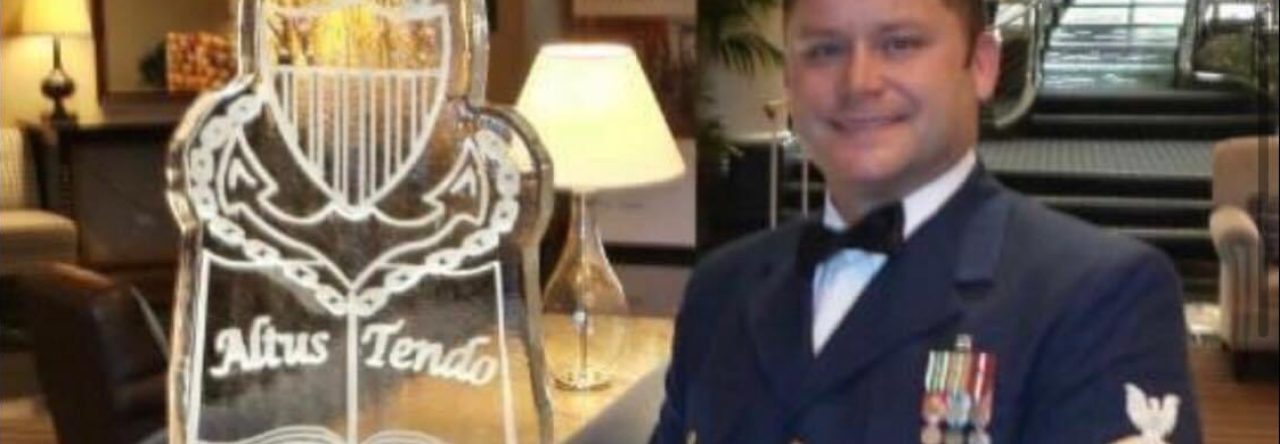
 I’m The 374th Surfman USCG